Redefining Football: How Manchester City and Magic Bus Are Using Sport for Development as a Tool Across India.
Across the UK, football has increasingly become a vehicle for more than performance. Through Manchester City and the wider work of the City Football Group, we have seen how structured programmes can contribute to community engagement, youth development, and social impact. From Premier League community programmes to broader football club social impact UK initiatives, there is a growing understanding that sport can play a meaningful role in addressing systemic challenges.
Yet, while this shift is well recognised in the UK, its application at scale across the globe in more complex development contexts offers a deeper insight into what sport can truly achieve.
The collaboration between Magic Bus and Manchester City provides one such case working across deprived and marginalised communities in India, where access to opportunity is limited, and where structured interventions are critical to enabling young people to move forward and achieve sustainable living.
From Engagement to Intervention: The Evolution of Sport for Development
Sport is often framed as an engagement tool, it is a way to bring young people together. However, the Magic Bus framework suggests that when designed intentionally, sport can function as a delivery system for behavioural change, personal development, and long-term outcomes, particularly for adolescents growing up in environments shaped by disadvantage.
Through the Healthy Heroes programme, Magic Bus is working with Manchester City to reach 7,000 adolescents across 7 cities in India, using football not as an end, but as a tool, it is a structured intervention to change futures of young people.
Rather than focusing solely on play, the programme integrates football into a broader framework that develops:
- Decision-making and problem-solving
- Communication, teamwork, and leadership
- Self-management, resilience, and stronger mental health
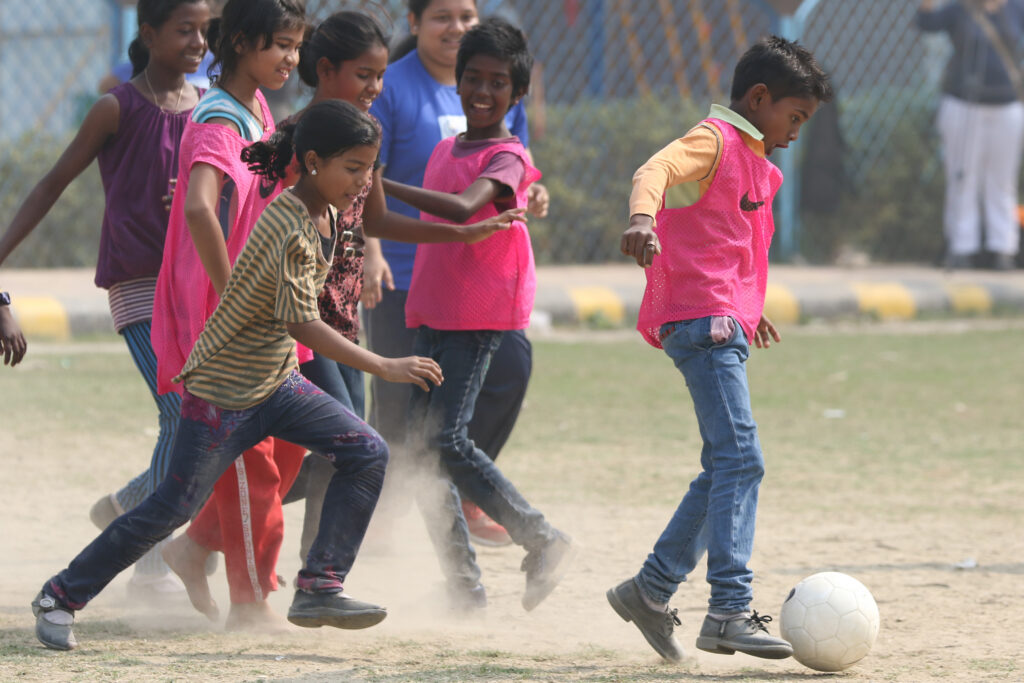
These life-skills are increasingly recognised as essential within both education and employment systems, particularly today in contexts where one needs more than formal learning to prepare for the workforce. For many of these young people, this is not just about learning skills, it is about using them to break out of cycles of extreme disadvantage, building a pathway forward.
Localisation: The Challenges and Delivery
One of the defining features of this programme is its localised design within a scalable model, a principle often discussed in global development, but has its challenges when implemented effectively in communities that are distinct from each other. With Manchester City delivering community programmes across the globe, they seem to have immersed themselves at the grassroots level to ensure impact is tailored to the communities they serve.
Each of the seven locations integrates football sessions with a specific community focus:
- WASH interventions in Delhi and Ahmedabad
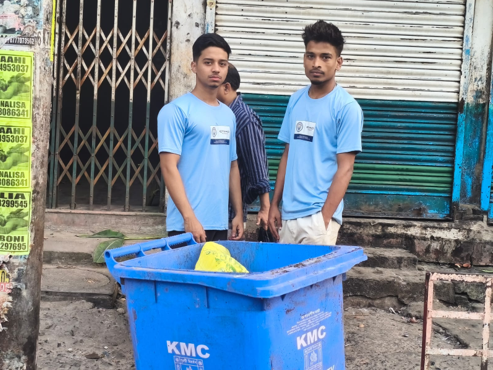
- Waste management initiatives in Bangalore and Hyderabad
- Green skills in Kochi
- School retention in Mumbai
- Gender inclusion through Girl Champions in Kolkata
This reflects a broader shift within sport foundation community work, where sport is used not in isolation, but as part of multi-layered interventions that address real community challenges and respond directly to the lived realities of young people.
Leadership is an Outcome, Not an Add-On
A consistent gap in many football charity social change initiatives is the transition from participation to leadership. In this programme, that transition is in-built in the model.
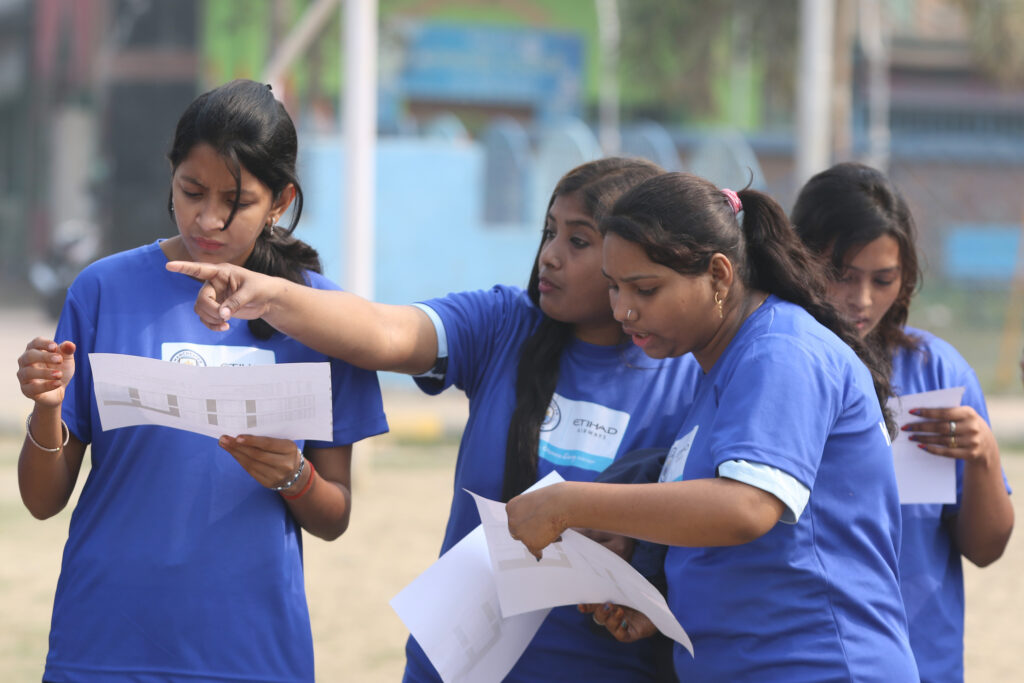
Young people are not only engaged in football sessions, from the start we call them Young Leaders. They are prepared to lead and represent the community they belong to. Manchester City and Magic Bus together train them to develop critical life skills, thereafter making leadership ready such that they are responsible for designing and delivering sessions within their own communities.
This shifts the model from service delivery to community ownership, where one individual becomes a catalyst, influencing and enabling change within their own environment. This results in change at multiple levels in the community they come from, enabling many more to dream.
The outcomes are tangible.
In multiple locations, young leaders have:
- Mobilised communities to address waste disposal in shared spaces
- Advocated for improved water access through local governance systems
- Challenged gender norms by increasing girls’ participation in sport
These actions demonstrate a critical insight: When young people are given agency, sport becomes a platform for civic engagement and community transformation and not just personal development.
The Role of Global Football Institutions
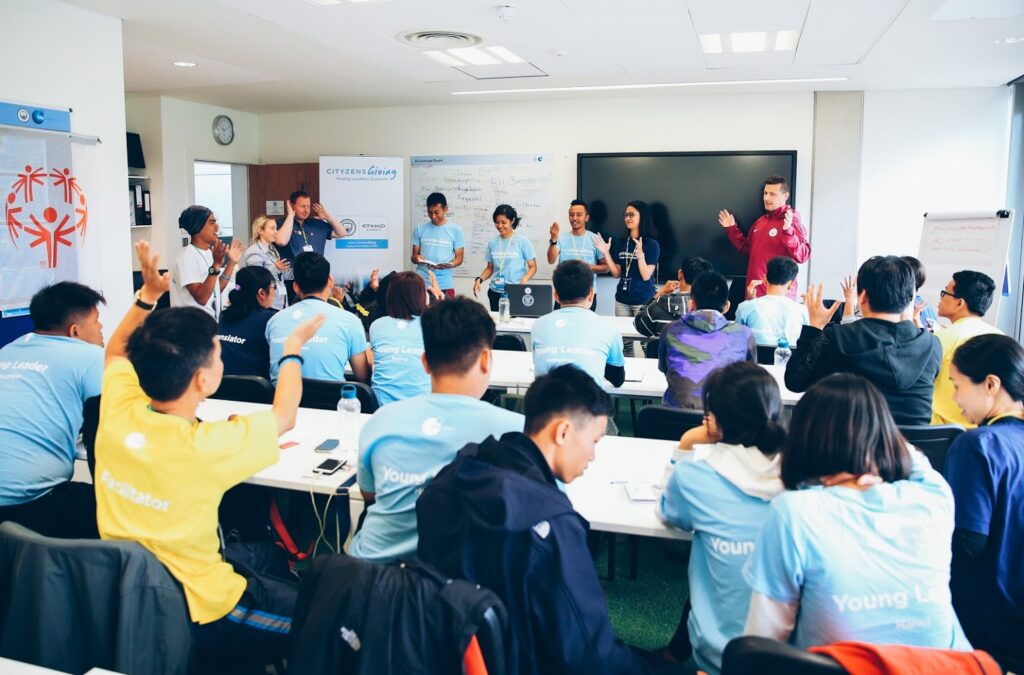
The involvement of Manchester City extends beyond funding or visibility. Through initiatives such as the Young Leaders’ Summit, the club brings structured expertise in leadership, coaching and programme design.
Manchester City ensures impact through programmes where participants feel they are a part of a global movement. From learning life-skills in their own local communities to visiting the Etihad Stadium as a youth leader, (at the Young Leaders’ Summit), the football club ensures an evolution from community outreach to knowledge exchange that gives global exposure.
The Summit itself provides :
- Training in leadership, advocacy and project management
- Exposure to peer learning, and an opportunity to design and deliver workshops in the community
- A platform for young people to see themselves as part of a global brand
Gender Inclusion as a Systemic Shift
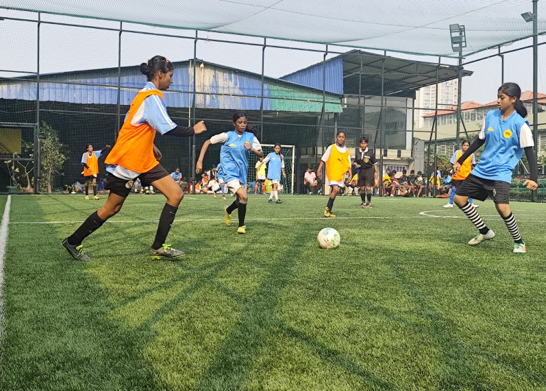
Perhaps one of the most significant outcomes of our programme is its impact on gender inclusion. In Kolkata, where participation in sport for girls has historically been limited, Magic Bus has observed nearly 70% of programme participants are female. More importantly, girls are not only participating, they are learning, they are leading.
This shift highlights a crucial insight sport has the power to challenge deeply embedded social norms specially when it is combined with structured support and community engagement. Magic Bus uses this insight in its programmes, teaching adolescents about gender equity at an early age, delivering the message that each person irrespective of their gender deserves the same opportunities.
Implications for the UK and Global Sport for Development
For UK audiences, where discussions around Clubs, Premier League, Community programmes and football club social impact continue to evolve, this partnership offers a valuable perspective.
It demonstrates that:
- Sport can function as a systemic intervention, not just an engagement tool
- Localised programme design is essential for meaningful impact
- Leadership development must be embedded, not assumed
- Cross-sector collaboration strengthens outcomes
Most importantly, it challenges a common assumption, that sport’s primary value lies in participation or winning. Instead, it positions sport as a framework for long-term development, particularly in contexts where young people are navigating structural barriers and limited access to opportunity.
As global conversations around sport and development continue to mature, partnerships like this offer a clear direction of travel.
Football, when structured with intent, can do more than just engage. It can build systems. It can shift behaviours. It can create pathways.
And most importantly, it can ensure that opportunity is not defined by where a young person starts but by what they are supported to become, and how they go on to shape change for others around them.